When your hearing feels obstructed, it can impact your daily routine and leave you feeling detached from your environment. It is common to assume that muffled sound signifies long-term hearing deficiency, but the problem is often just a treatable cerumen obstruction.
Differentiating between a wax impaction and true hearing loss is crucial for determining if you need a simple cleaning or a formal audiological exam. If you’re experiencing muffled hearing, remain calm. A clinical evaluation will provide the definitive answer, but the following resource outlines the primary variations between blockage-based issues and lasting loss.
How to Recognize a Cerumen Impaction
Your canals produce wax as a natural defense mechanism to maintain health and keep debris away from the tympanic membrane. Issues arise when excessive wax accumulates or becomes clogged.
Frequent indicators of cerumen impaction consist of:
- A noticeable reduction in hearing level
- A feeling of canal fullness or a “clogged” feeling
- Canal irritation or slight pain
- Internal ringing within the affected ear
- Instances of sharper hearing after a jaw stretch or chewing
Because blockages are tangible, they frequently impact just a single ear at a point rather than both equally. The good news is that clinical removal usually ends in an instant return of your natural hearing levels.
How Auditory Loss Usually Manifests
Unlike a brief obstruction, sensorineural hearing impairment usually advances steadily over decades and is not resolved by cleaning the ear.
Signs of actual hearing loss may include:
- Issues with word clarity in crowded or noisy settings
- Often needing clarification during everyday dialogue
- Turning up the television or smartphone audio higher than people prefer
- Difficulty hearing treble tones like birds or children’s voices
- Hearing uniformly reduced in both ears
A vital distinction is that true loss misses the tangible “clogged” sensation that follows a cerumen impaction.
At-a-Glance: Cerumen vs. Hearing Loss
While evaluating cerumen impaction vs. auditory impairment, a few clues can help guide you in the right direction:
- Timing: Obstructions can feel instant, while hearing loss is virtually always slow
- Permanence: Obstructions are a fast fix, while nerve loss requires long-term management
- Clues: Fullness points to a blockage; struggling with speech precision suggests impairment
- Sides: Unilateral dull sound points to cerumen, while both sides point to impairment
The Dangers of At-Home Cerumen Removal
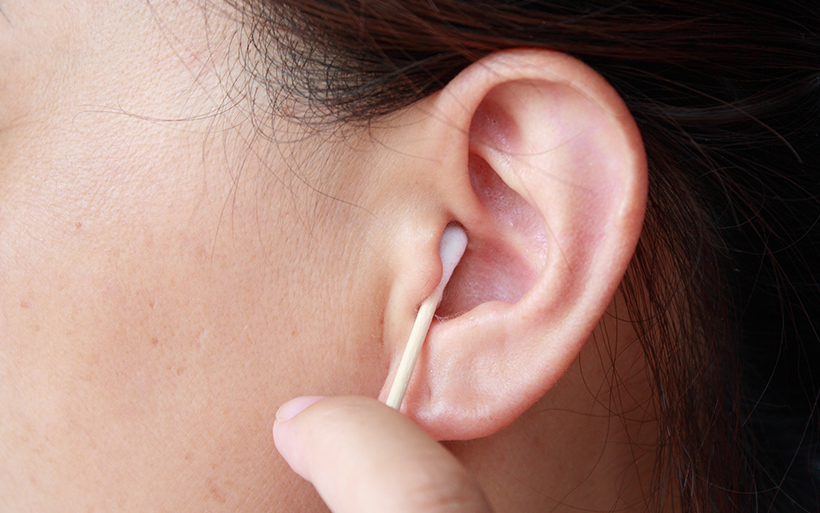
It’s tempting to presume cerumen is the culprit — and grab for cotton swabs or store-bought kits. Using foreign items typically shoves the plug further into the ear, increasing the risk of injury.
Health experts caution that putting anything smaller than your finger in your ear can lead to tympanic damage and major clogging.
On the other hand, presuming a concern is just wax when it is actually hearing loss can hinder you from obtaining the help you require to remain connected.
What to Anticipate During a Formal Appointment
A brief otoscopic check can quickly verify if cerumen is obstructing the ear.
If cerumen is found, clinical extraction often resolves symptoms on the spot.
If no wax is detected, a diagnostic hearing test will be used to identify the type and extent of any underlying impairment.
The National Institute on Deafness and Other Communication Disorders (NIDCD) advises immediate evaluation anytime shifts in auditory function interfere with your everyday routine.
Choosing the Right Solution for Better Sound Quality
Muted sound is not a definitive sign of chronic loss.
Very often, the issue is merely an accumulation of cerumen that can be quickly resolved.
Obtaining expert care ensures you locate the exact source and the right remedy for your hearing needs.
Keep in mind that self-diagnosis is hardly a substitute for a clinical check-up when it pertains to your hearing.
Addressing the issue immediately halts the stress of the uncertainty and puts you on the track to better auditory function.
If your auditory sense feels diminished, avoid guesswork. A brief check can make all the difference, so contact our team of specialists today.