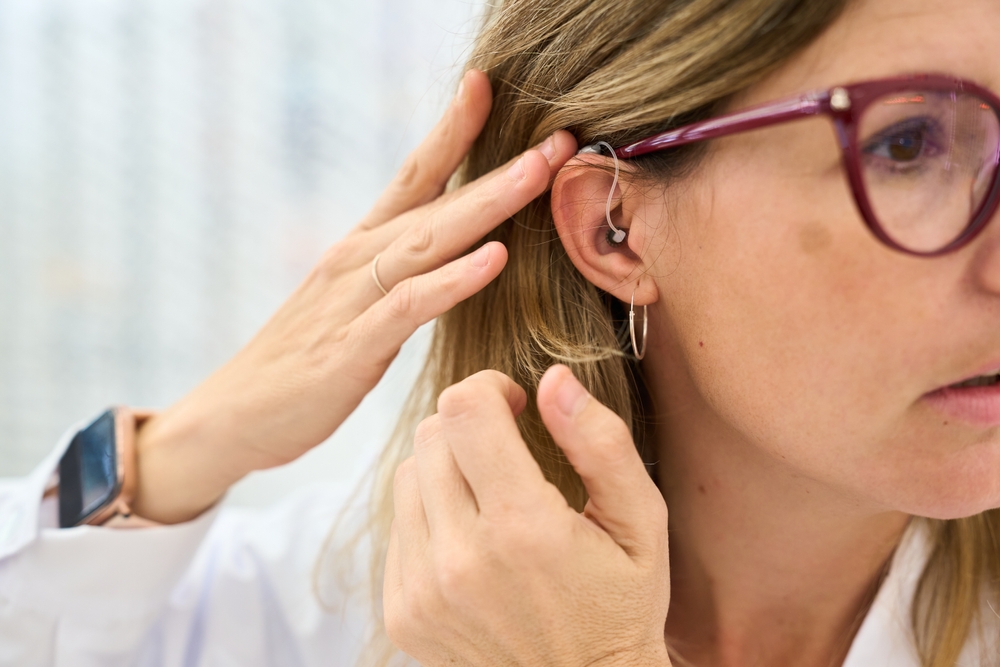
It is incredibly common for individuals to resist getting hearing instruments simply because they dread a bulky appearance or an uncomfortable fit. This hesitation is entirely valid given historical product designs! In various scenarios, patients expressed fear that wearing an obvious device would cause peers to omit them from casual conversations due to perceived listening limitations.
This obsolete perception remains deeply embedded in the public consciousness, creating a massive barrier to proactive treatment. In reality, the sophisticated hearing instruments of the present era deliver a look and feel that shatters these old assumptions. Advances in design and technology have made them smaller, more comfortable, and far more discreet.
Should your reluctance stem entirely from memories of obsolete, bulky hardware, you owe it to yourself to discover current medical advancements.
The Hearing Aid You’re Picturing Doesn’t Really Exist Anymore
If you close your eyes and picture a hearing aid, you might imagine something large, hooked over the ear, and visible from across the room. Should that be your current expectation, you are inadvertently recalling the clunky designs common to the 1980s and 1990s.
Since that era, the manufacturing landscape for hearing solutions has completely transformed. Continuous refinements in ergonomic styling, nanometer-scale circuitry, and digital audio engineering have radically overhauled the modern cosmetic profile. The resulting devices are beautifully downsized, highly aerodynamic, and built to match lifestyle needs by remaining completely hidden.
Numerous modern instruments are inserted completely within the ear canal structure, rendering them undetectable throughout standard daily dialogue. Alternatively, post-auricular models are constructed with such streamlined dimensions that they disappear against the scalp, customizable to complement individual skin and hair coloration.
Navigating Modern Hearing Technology: The Three Core Styles Evaluated
If you’re wondering what your main options in hearing aids actually look like, here’s a simple breakdown:
Deep Canal Solutions: Invisible-in-Canal (IIC)
For total subtlety, these instruments have no medical equal. An IIC device is positioned entirely past the second bend of the auditory canal, fabricated from a personalized physical matrix of your unique anatomy. Spoken interactions at arm’s length occur without anyone realizing a medical device is present. This configuration is highly favored by individuals managing mild-to-moderate auditory drops who demand total aesthetic secrecy.
The Versatile Receiver-in-Canal (RIC) / Receiver-in-the-Ear (RITE) Style
This particular layout has become the benchmark standard for contemporary hearing health restoration. The system utilizes an incredibly small housing resting behind the ear, linked by a hair-thin translucent cable to a miniature speaker within the ear pathway. At a glance, they often resemble wireless earbuds. Most people won’t notice them unless they’re looking.
Behind-the-ear (BTE)
This style positions the main component body post-auricularly, offering a slightly larger footprint that remains beautifully sculpted and sleek. They are typically prescribed to resolve advanced levels of hearing impairment, generating exceptional sound amplification without the cumbersome weight users traditionally dread.
Ultimately, contemporary hearing aids are built to empower your daily routine rather than broadcast a medical condition to the world.
Advanced Features: Beyond Aesthetics to Smart Technology Integration
The recent metamorphosis of hearing instruments extends far beyond mere cosmetic downsizing. In the current era, these processors operate like sophisticated wearable computers rather than simple analog sound amplifiers. A vast majority feature native Bluetooth connectivity, enabling seamless, wireless streaming of telephonic communication, media, and television audio directly into your auditory pathway.
Managed via intuitive phone interfaces, these systems give you the power to mix sound levels or change situational profiles without ever touching your ears. Say you’re walking into a noisy restaurant: You can fine-tune your hearing to match the environment in seconds. Advanced rechargeable battery banks have effectively replaced the small, fragile power cells that used to cause immense frustration. You merely dock the devices on a nightstand inductive charger, exactly like replenishing your mobile phone.
Overcoming the Psychological Barriers to Better Hearing
Despite being aware of these massive design improvements, it is entirely normal to feel a sense of hesitation. Scheduling an appointment can feel like a profound internal challenge because it represents an open admission of sensory alteration. This mental hurdle can make an individual feel exposed, creating a false impression of losing authority over personal wellness.
But here’s a different way to look at it: Hearing aids aren’t a sign that something has gone wrong. They’re simply a sign of change, which happens to us all. Choosing to hear better is absolute evidence that you are choosing to optimize your body and enhance your overall quality of life.
Imagine wearing a discreet, barely (if at all) visible device and finally being able to follow along in conversation, hear better in crowds, and focus on the things that really interest you. That is a magnificent example of reclaiming control over your life!
Experience Contemporary Hearing Technology Firsthand
The most effective method to permanently banish an obsolete stereotype is to personally examine current clinical options. Our clinical team cordially invites you to visit our facility, interview our staff, and evaluate different form factors in a stress-free, zero-obligation environment. Treat this as a risk-free exploratory step to comprehend the incredible aesthetic shift that has occurred in our field.
Most people leave surprised by how small, comfortable, and natural modern hearing aids have become! Please contact our patient care coordinators or utilize our digital portal to secure your consultation this week.